
Your cart is currently empty!
Climate Change Threatens Nigeria’s Agriculture as Farmers Struggle with Drying Rivers and Low Yields.
•
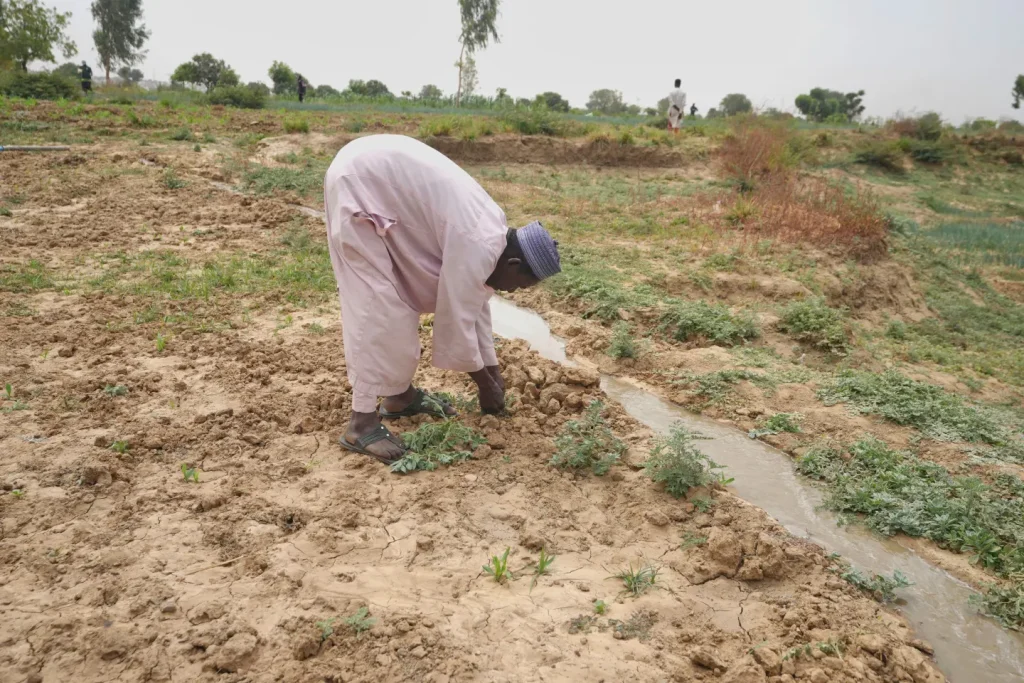
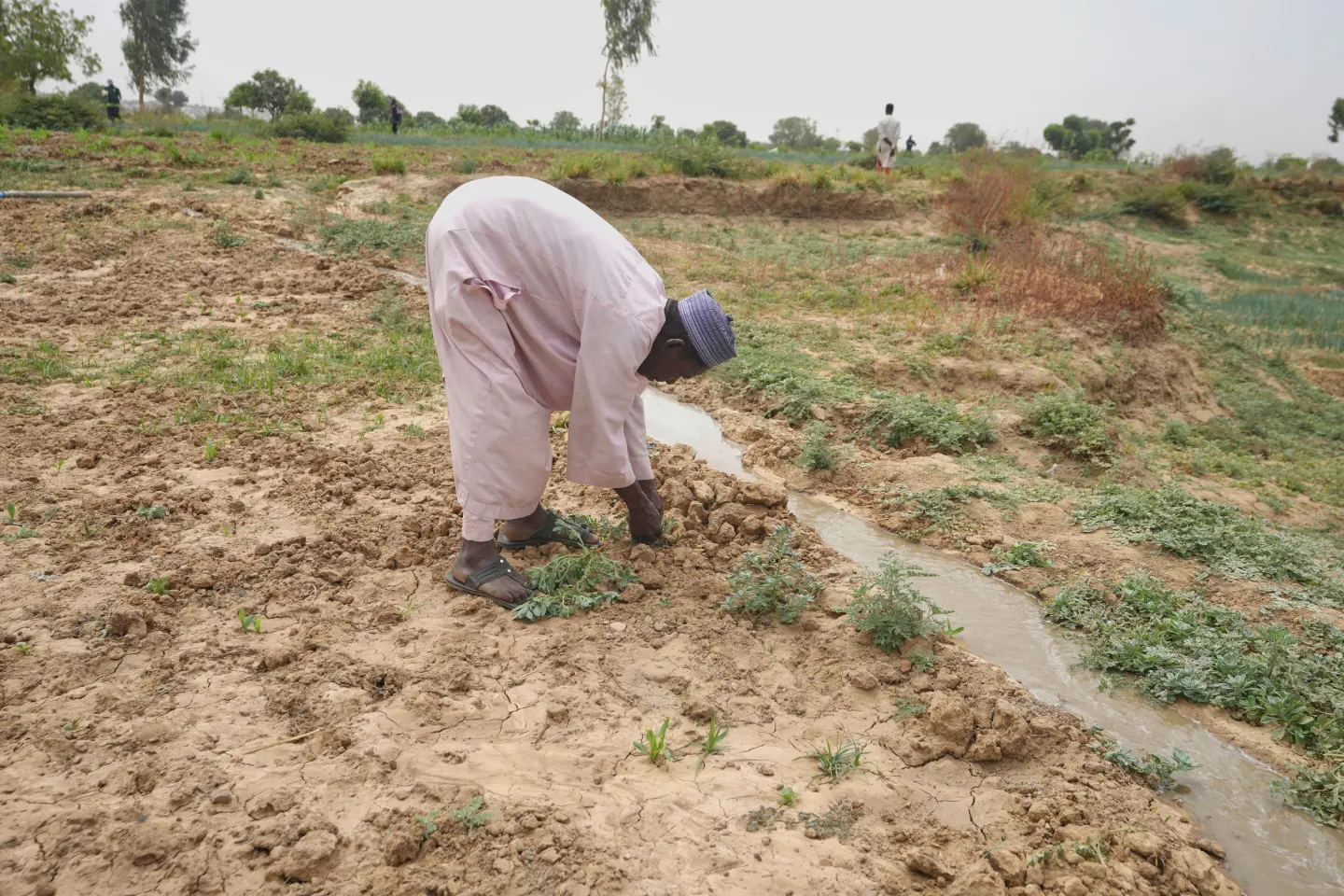
A murky puddle is all that remains of a once-flowing river near the 5-hectare farm of 62-year-old Muazu in Sokoto State, Nigeria. Without the resources to dig a well, his crops of millet and maize face ruin, and he is considering abandoning farming altogether.
“Before, with a small farm, you could get a lot,” he lamented.
Climate Change and Food Insecurity
Nigeria, Africa’s most populous nation, is experiencing the devastating effects of climate change. Prolonged dry spells, extreme heat, and shrinking water bodies are leaving farmers vulnerable. The World Food Program (WFP) reports that 31 million Nigerians already face food insecurity, with each climate shock compounding the last.
The crisis is particularly severe in northern Nigeria, where smallholder farmers produce most of the nation’s food. Their struggles directly impact food prices and availability in the booming coastal south, including Lagos.
Drying Rivers, Low Yields
More than 80% of Nigeria’s farmers are smallholders, providing 90% of the country’s agricultural output. But yields are falling. Farmers blame the lack of government infrastructure such as dams that could help mitigate drought.
In Adamawa State, changing rainfall patterns and high temperatures have affected over 1,250 hectares of farmland, disrupting livelihoods. Over-extraction of water and widespread deforestation are further worsening the crisis.
Farmers like Nasiru Bello, also in Sokoto, struggle to sustain onion production by pumping groundwater. But with soaring fuel prices, irrigation has become costly and unsustainable.
“The plants do not grow well as they did,” he explained.
Economic Impact
Agriculture contributed 22% to Nigeria’s GDP in Q2 2024, down from 25% the previous quarter, according to government data. Meanwhile, household food imports rose by 136% between 2023 and 2024, highlighting the widening supply gap.
Food prices are surging in Lagos, where a head of cabbage that once cost less than 400 naira in Sokoto now sells for 2,000 naira ($1.20) — nearly double last year’s price.
Climate-Smart Agriculture: A Way Forward
The UN Food and Agriculture Organization (FAO) recommends climate-smart agriculture as a solution, such as drip irrigation to conserve water and tree planting to combat deforestation.
“There should be more orientation for farmers about climate change,” urged Yusuf Isah Sokoto, Director of the College of Environmental Science at Umaru Ali Shinkafi Polytechnic. He noted that Sokoto State has already lost two-thirds of its tree cover, driving up temperatures.
Government Response
Nigeria’s President Bola Tinubu has identified agriculture as central to economic prosperity. Shortly after taking office in 2023, he declared a food security state of emergency and announced plans to activate 500,000 hectares of farmland in northern land banks. However, those land banks remain inactive, and farmers are yet to feel the promised relief.
As Nigeria’s population is projected to hit 400 million by 2050, urgent reforms are needed to ensure food security and protect smallholder farmers from the worsening impacts of climate change.
Leave a Reply